
What should you look out for when buying a dehumidifier? A practical guide
Table of Contents:
1. How to choose a dehumidifier? Why does the quality of the device matter?
2. How to select a dehumidifier for the place of use?
3. Dehumidification capacity – what should you know about it?
4. A few additional parameters worth considering
5. Key steps when buying a dehumidifier
6. Summary
7. FAQ
Buying a dehumidifier is worth considering not only when a moisture problem is already visible. The device can also prove useful after renovation work or flooding, as well as in basements, garages, laundry rooms or rooms with limited ventilation.
However, for a dehumidifier to work effectively and economically, it should be matched to the conditions in which it will operate. Price, appearance or the number of additional features alone do not always indicate that a particular model will be the best solution.
In this guide, we present the most important parameters to consider before buying an air dehumidifier. This will make it easier to choose a device suited to your needs and avoid the most common mistakes when making your decision.
1. How to choose a dehumidifier? Why does the quality of the device matter?
There are many dehumidifier models available on the market, which means not only a wide range of choices and prices, but also varying levels of equipment quality. Choosing cheaper alternatives may result in:
- longer dehumidification time,
- higher energy consumption,
- insufficient capacity,
- noisier operation,
- higher operating costs.
A properly selected dehumidifier makes it possible to achieve the desired result more quickly, provides greater comfort of use and helps reduce operating costs in the long term.
2. How to select a dehumidifier for the place of use?
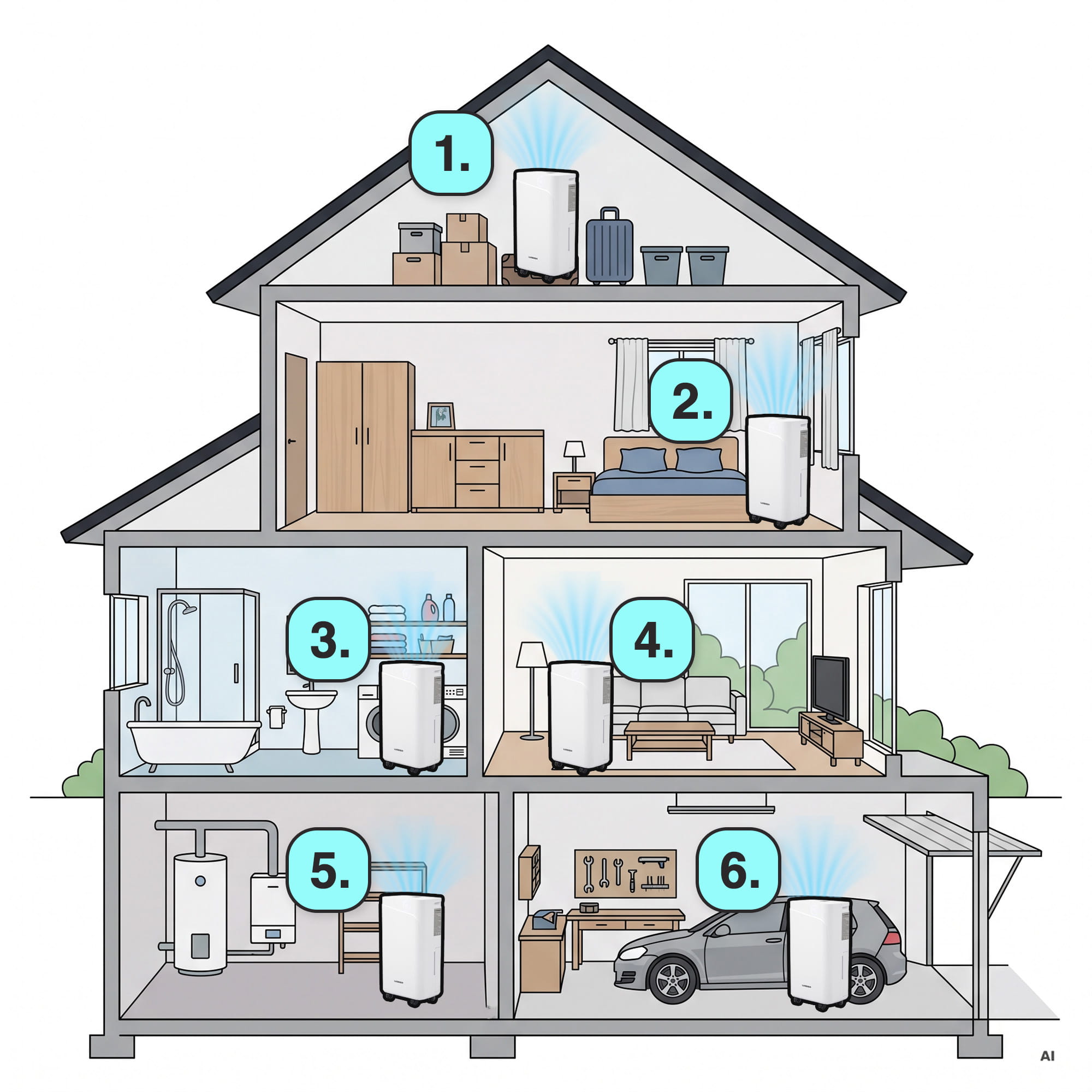
One of the most important steps before buying an air dehumidifier is determining where the device will be used. The conditions in a home are significantly different from those in a basement, garage or warehouse, so the same model will not always work well in every situation.
Dehumidifier for a flat or house
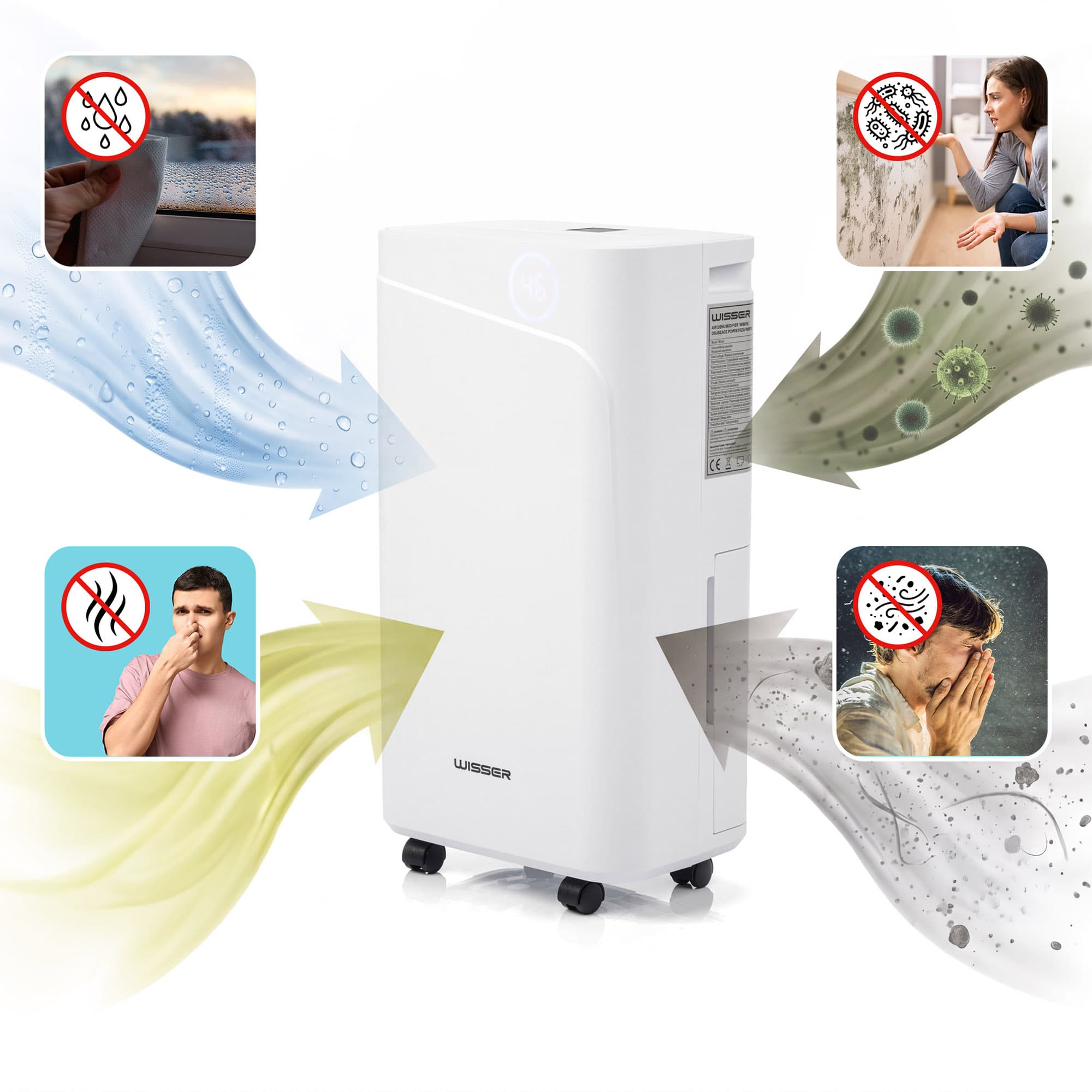
In residential rooms, a dehumidifier most commonly helps maintain a comfortable humidity level and reduce the risk of mould and fungal growth.
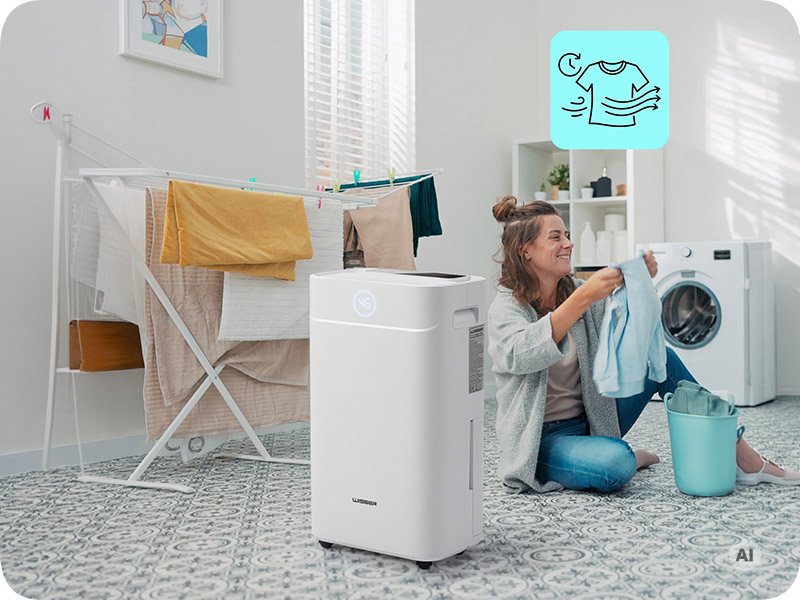
The device can be particularly useful in a bathroom, laundry room, bedroom or living room, especially if the problem involves fogged-up windows, laundry that takes a long time to dry or excessively high air humidity.
For flats and houses, condensation dehumidifiers generally work well, achieving their highest efficiency in heated rooms. When choosing a model, it is worth considering not only its capacity but also the noise level, as the device often operates for many hours, including in the evening or at night.
Dehumidifier for a basement or garage
Basements and garages are places where moisture often remains present throughout the year. Lower temperatures, limited ventilation and contact with damp surfaces can contribute to mould growth, corrosion of tools or dampness affecting stored items.
In such conditions, particular attention should be paid to the device's operating temperature range and dehumidification capacity. If the dehumidifier is to operate in a cold room, a standard condensation model may not achieve its full efficiency. In such cases, devices designed to operate at lower temperatures or – for certain applications – desiccant dehumidifiers may be a better choice.
Dehumidifier for a warehouse, workshop or commercial premises
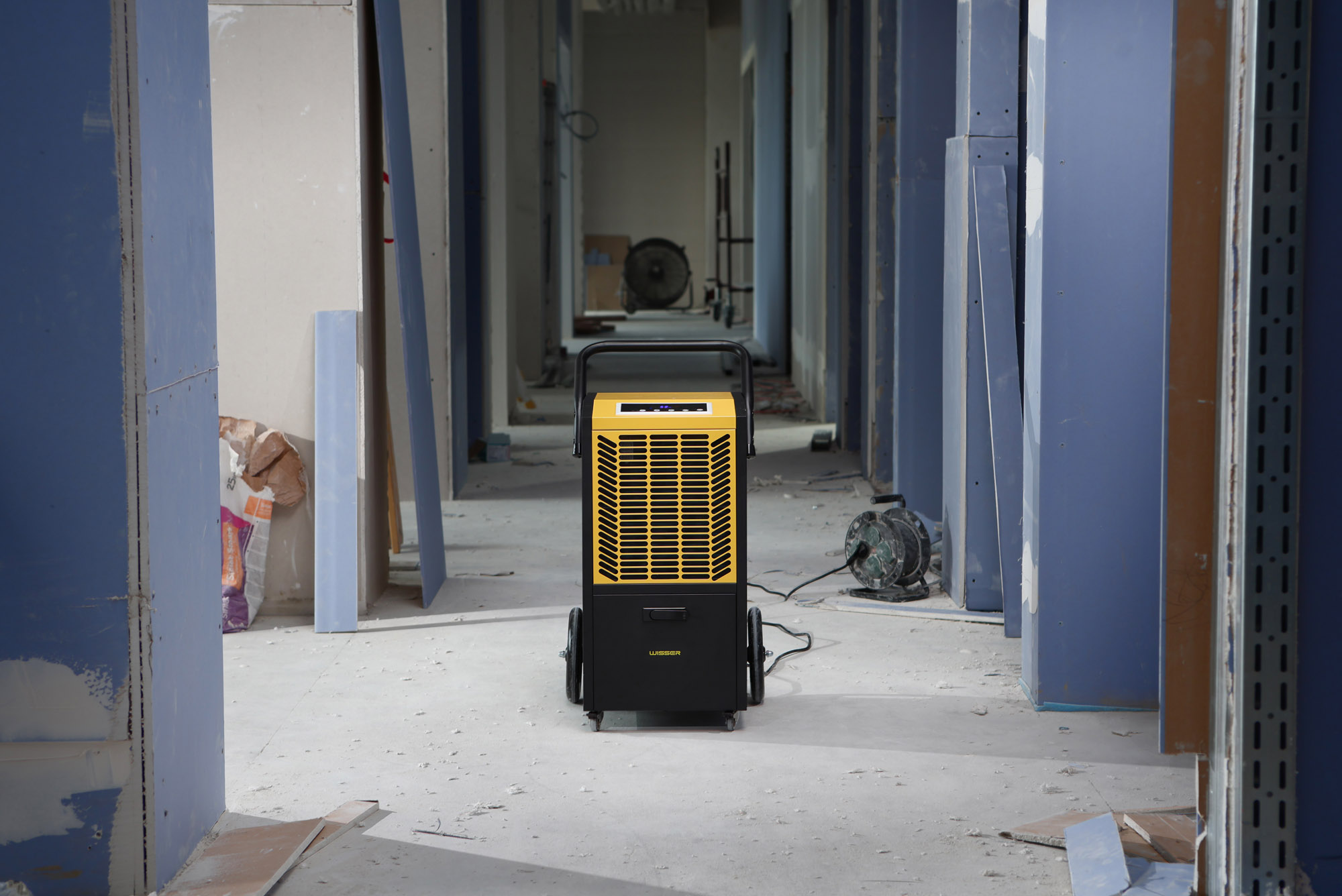
In larger spaces, capacity and the ability to operate for extended periods are particularly important. The dehumidifier should be selected not only according to the size of the room, but also the humidity level and intensity of use.
If the device is expected to operate for many hours each day, it is worth choosing a model equipped with a continuous drainage function. This eliminates the need to empty the water tank regularly, making everyday use significantly more convenient.
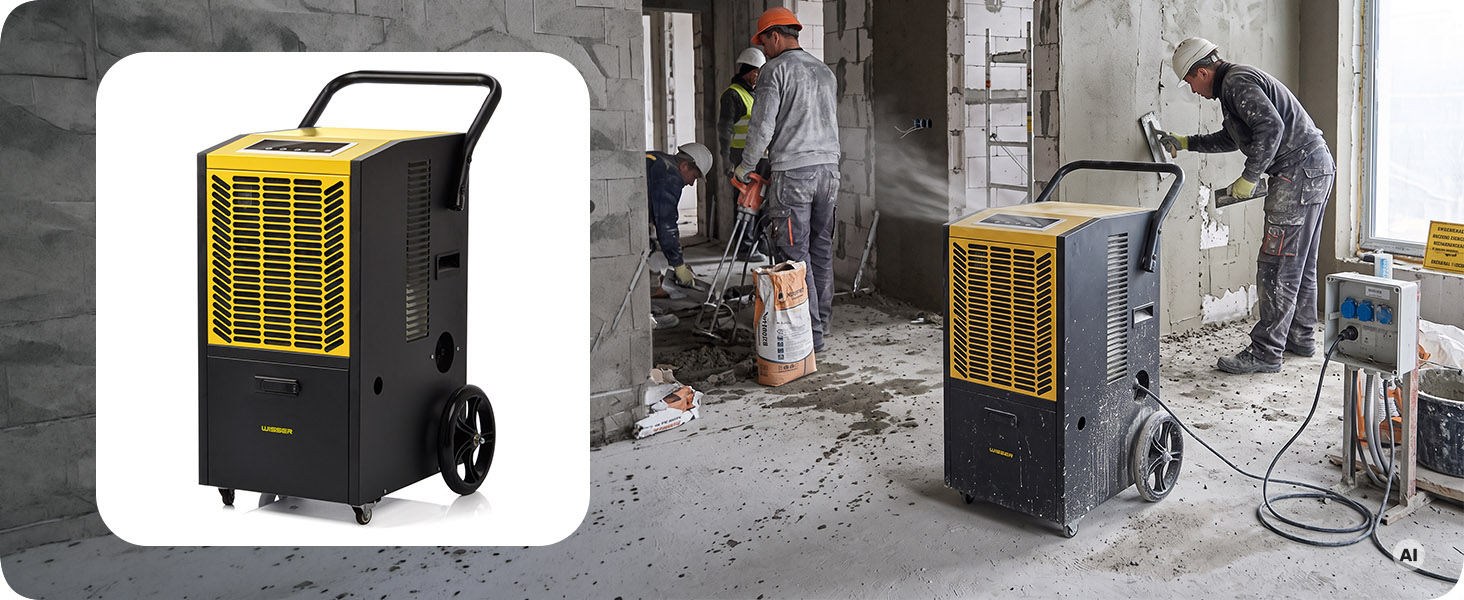
In every case, regardless of where the dehumidifier will be used, a good starting point is to carefully assess the conditions in the room. Only then is it worth comparing the technical parameters of individual models. This will make it possible to choose a dehumidifier that operates effectively and economically while delivering the expected results.
3. Dehumidification capacity – what should you know about it?
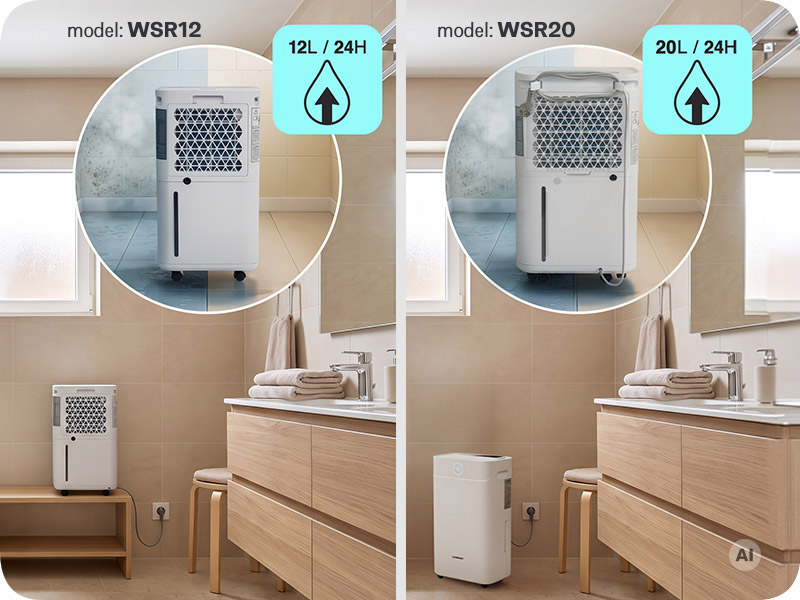
One of the most important parameters of an air dehumidifier is its capacity, meaning the amount of moisture the device is able to remove from the air within 24 hours. This parameter is given in litres per day (L/24 h).
What does this mean in practice?
If the manufacturer states that a dehumidifier has a capacity of 20 L/24 h, this means that under suitable conditions the device can remove up to 20 litres of water from the air in one day. However, this does not mean that the tank will fill with exactly this amount every day. Actual performance depends, among other things, on the temperature in the room and the humidity level.
Many people choose a dehumidifier solely on the basis of room size. This is a good starting point, but it is not the only criterion worth considering. The severity of the moisture problem and the place where the device will operate are also important.
For example, two garages measuring 30 m² may require completely different devices. One may be well insulated and used only occasionally, while the other may be cold, poorly ventilated and exposed to constant moisture. In the second case, a dehumidifier with a higher capacity will handle the task much more effectively.
If the device is too weak, removing the moisture will take longer and the dehumidifier will operate almost continuously. On the other hand, properly selected capacity makes it possible to reach the optimum humidity level more quickly and ensures more efficient device operation.
What dehumidifier capacity should you choose?
For a flat with an area of around 40–60 m², a dehumidifier with a capacity of approximately 12–20 L/24 h is usually sufficient, while larger or more heavily affected rooms may require models with a capacity of 20–30 L/24 h or more. The exact choice depends on the humidity level and temperature.
4. A few additional parameters worth considering
Dehumidification capacity is one of the most important parameters, but it is not the only one worth analysing before making a purchase. Comfort of use, operating efficiency and running costs are also influenced by:
- Device operating temperature – the temperature in the room affects the effectiveness of the dehumidifier. Most condensation models perform best in heated interiors, while for cold basements, garages or warehouses it is worth choosing devices designed to operate at lower temperatures.
- Water tank capacity – the larger the tank, the less frequently it needs to be emptied. If the dehumidifier is expected to operate for many hours, it is worth considering a model that allows continuous condensate drainage.
- Power consumption and running costs – higher power does not always mean greater energy consumption. A more efficient device may reach the required humidity level more quickly, allowing it to operate for a shorter period.
- Noise level – if the dehumidifier will be used in a bedroom, living room or office, it is worth paying attention to the noise level. In utility rooms, this parameter is usually less important.
- Features that make everyday use easier – a humidistat allows you to set the target humidity level, so the device switches off automatically once the selected value has been reached. In addition, a timer, automatic shut-off when the tank is full and a laundry-drying function are features that improve convenience and help adapt the device's operation to individual needs.
- Filters and air quality – most dehumidifiers are equipped with a dust filter, while some models also offer carbon or HEPA filters. Although the primary purpose of the device is to remove excess moisture, the filters used may additionally help reduce the amount of dust and other pollutants in the air.
Analysing all of these parameters makes it possible to choose a dehumidifier that not only removes excess moisture effectively, but also provides convenient use and optimum operating costs.
5. Key steps when buying a dehumidifier
- Match the capacity to the size of the room.
- Check the operating temperature range.
- Pay attention to the noise level.
- Choose an appropriate water tank capacity.
- Check whether continuous condensate drainage is possible.
- Assess energy consumption.
- Choose features that suit your needs.
6. Summary
Choosing the right air dehumidifier should be preceded by an analysis of several key parameters. Not only the capacity of the device matters, but also the place where it will be used, its operating temperature, power consumption, noise level, water tank capacity and available features. Only by taking all of these aspects into account can you select a model that will effectively remove excess moisture and provide comfortable use.
Our range includes dehumidifiers with different capacities, making it easy to select a device for both flats and houses as well as larger rooms requiring more intensive dehumidification.
Explore the available models and choose the solution that best meets your needs!
7. FAQ
Recommended

Air dehumidifier Wisser WSR12 12 L/24 h

Air dehumidifier Wisser WSR20 20 L/24 h
